More Walk | Less Waste
More Walk | Less Waste

An Ecosystem of kiosks providing shared bags and trolleys for everyday errands, reducing ownership and hassle
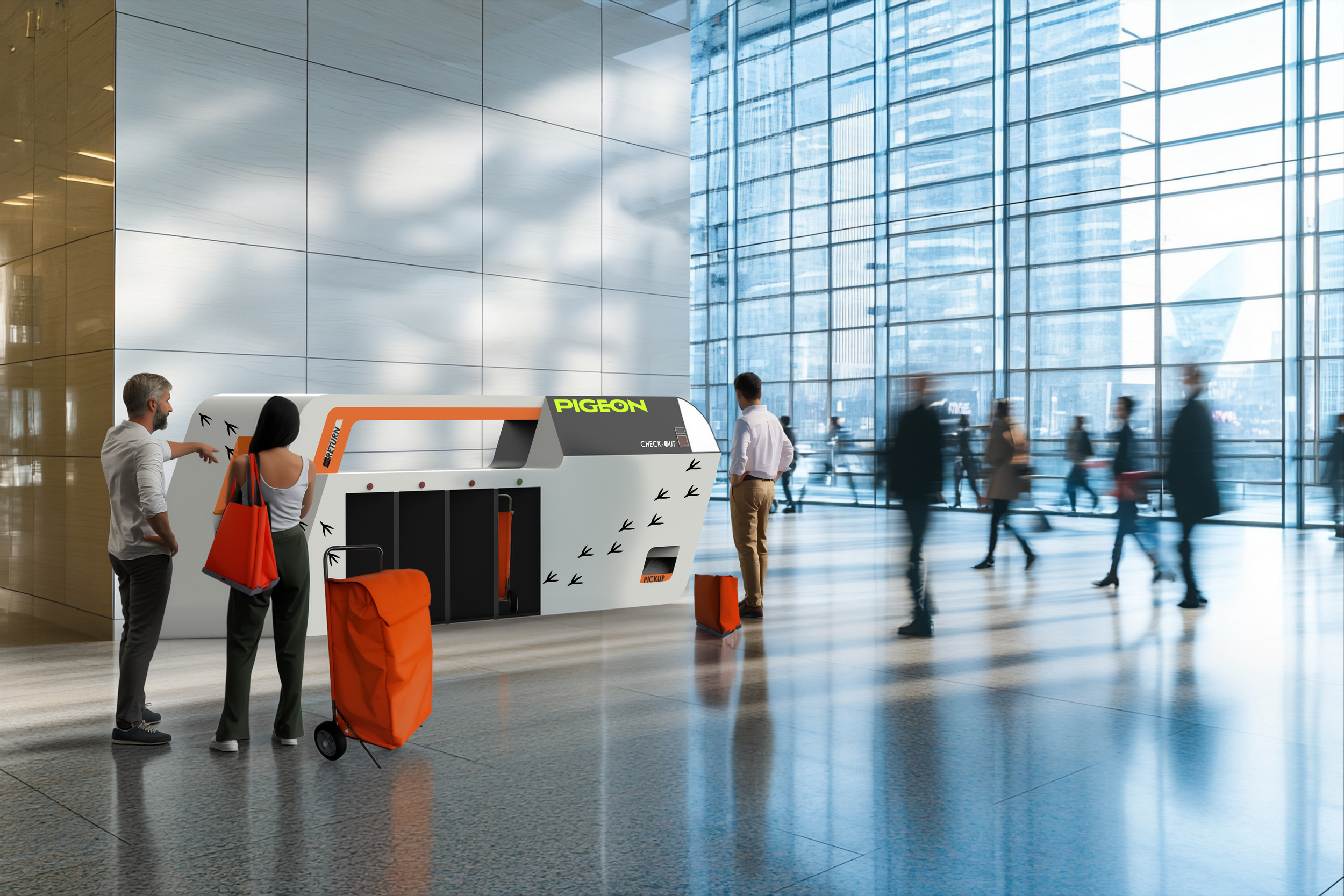
Video Presentation
Refer to boards below for referenced materials and features
Presentation Materials
A Summary of Processes, Features, and Development
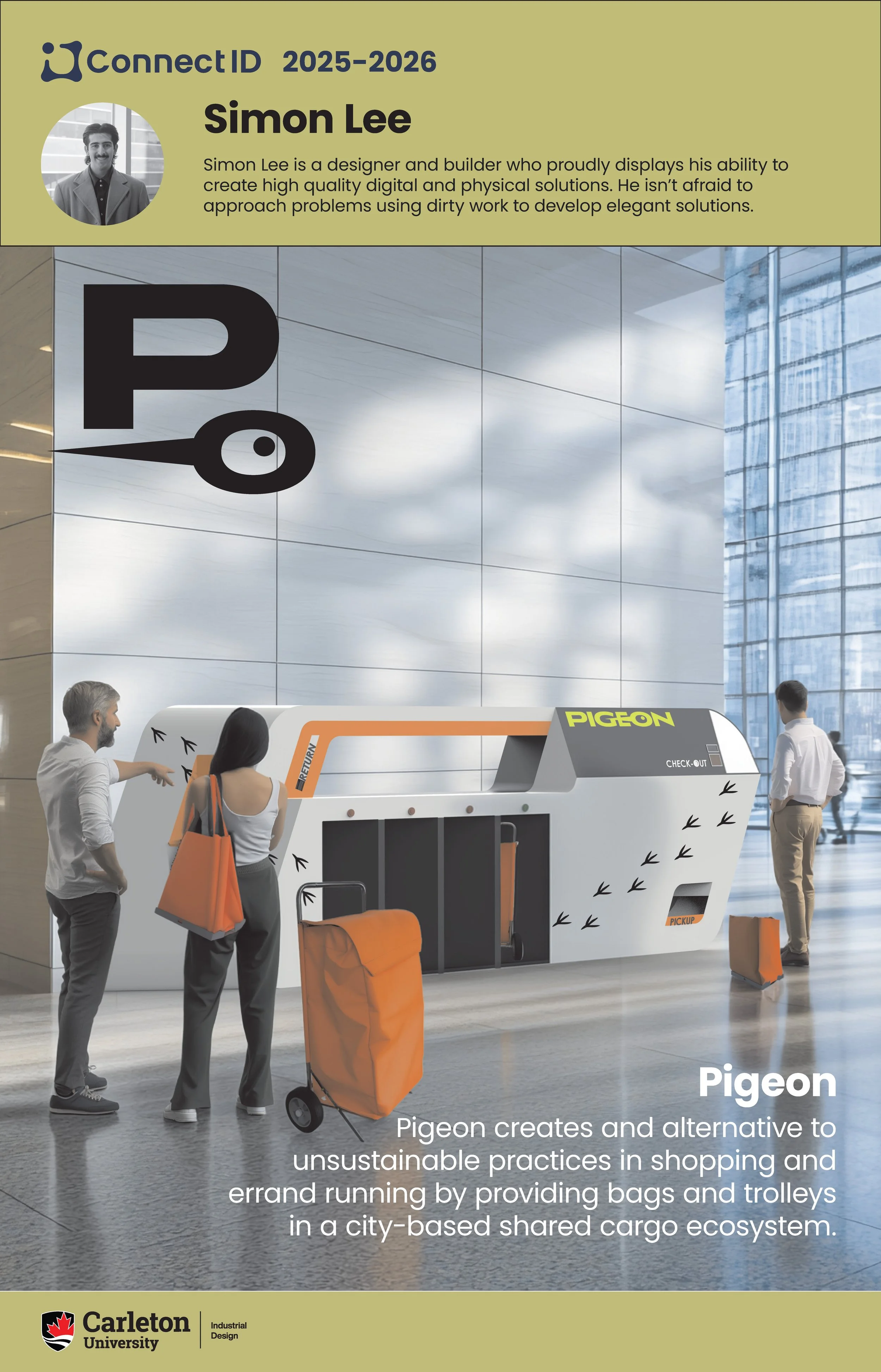
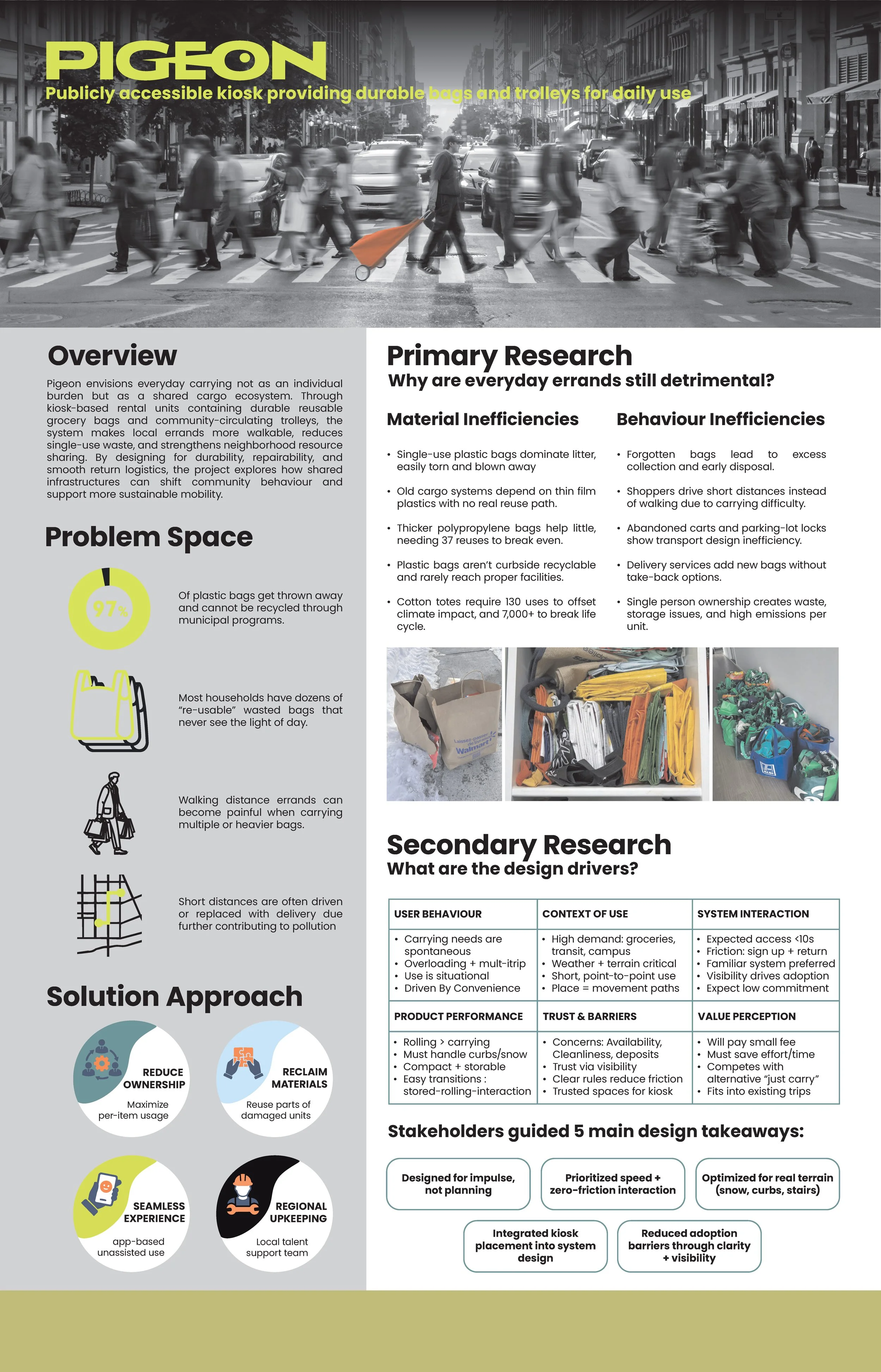
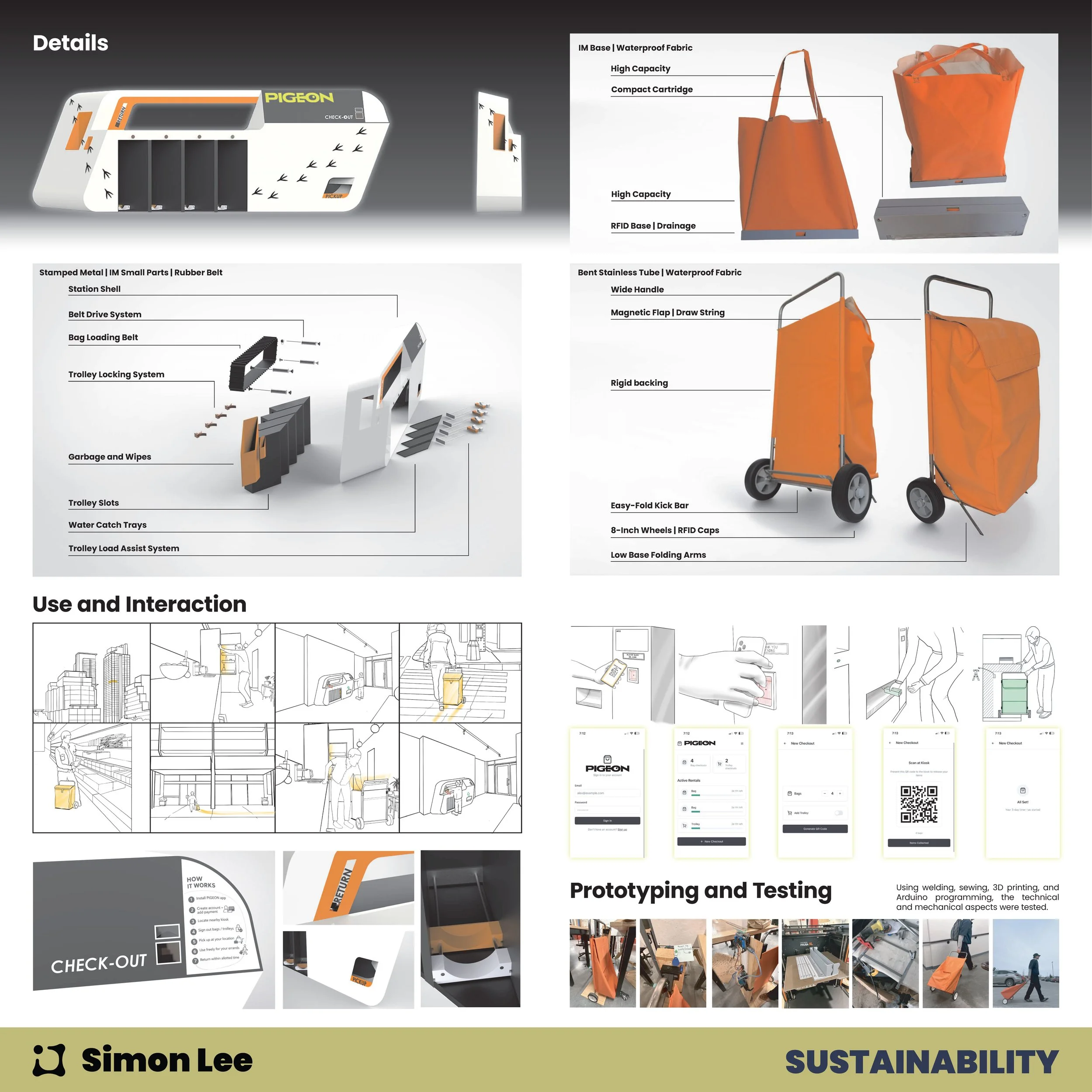
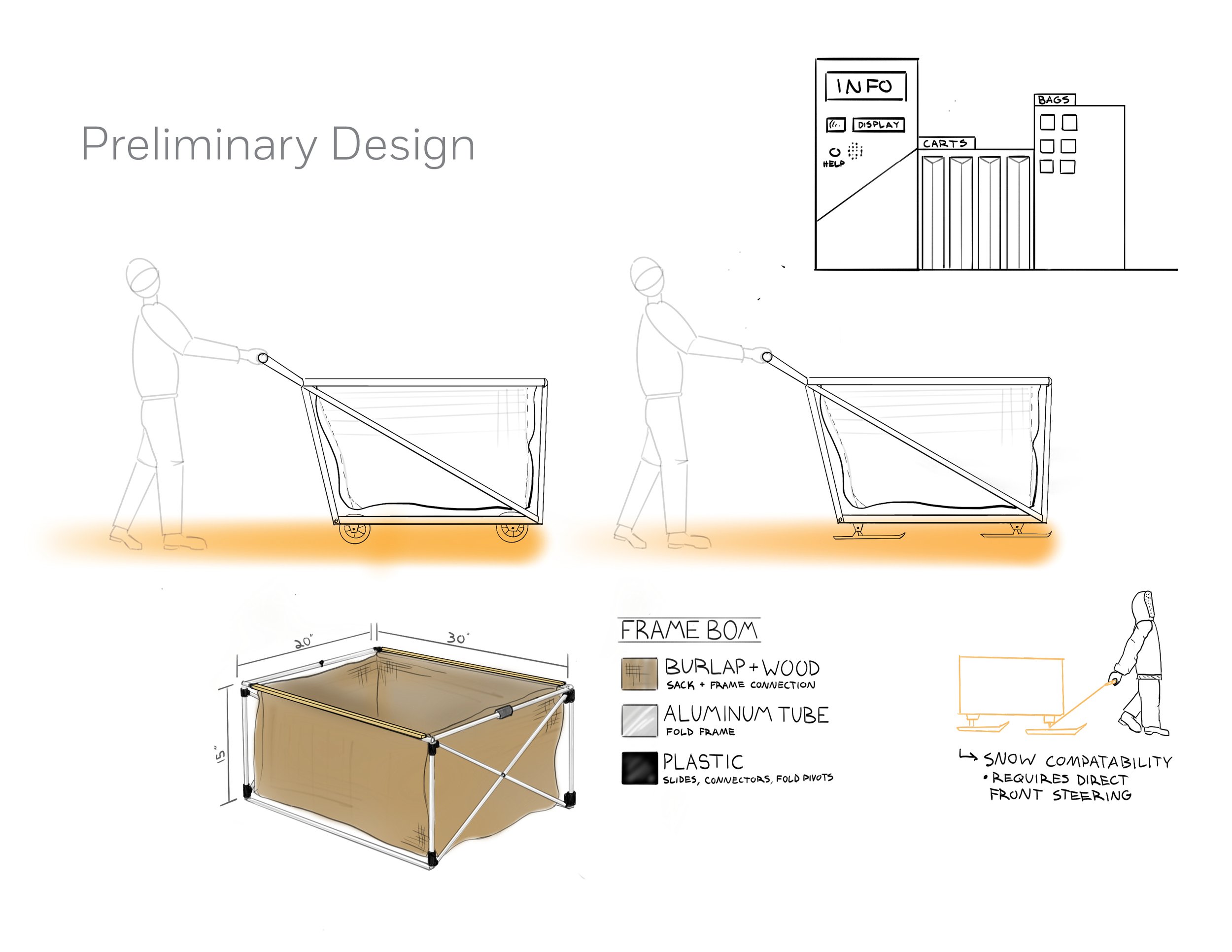
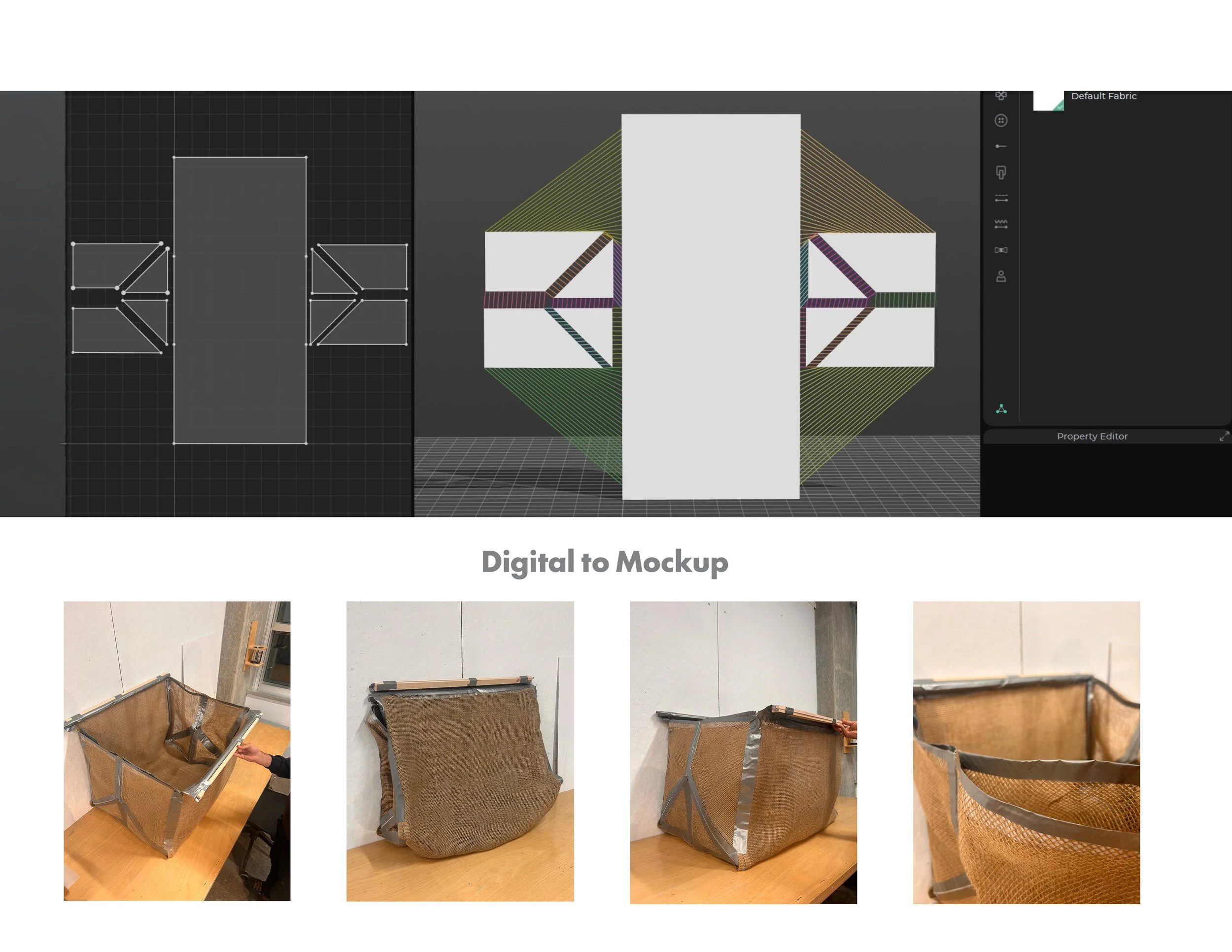
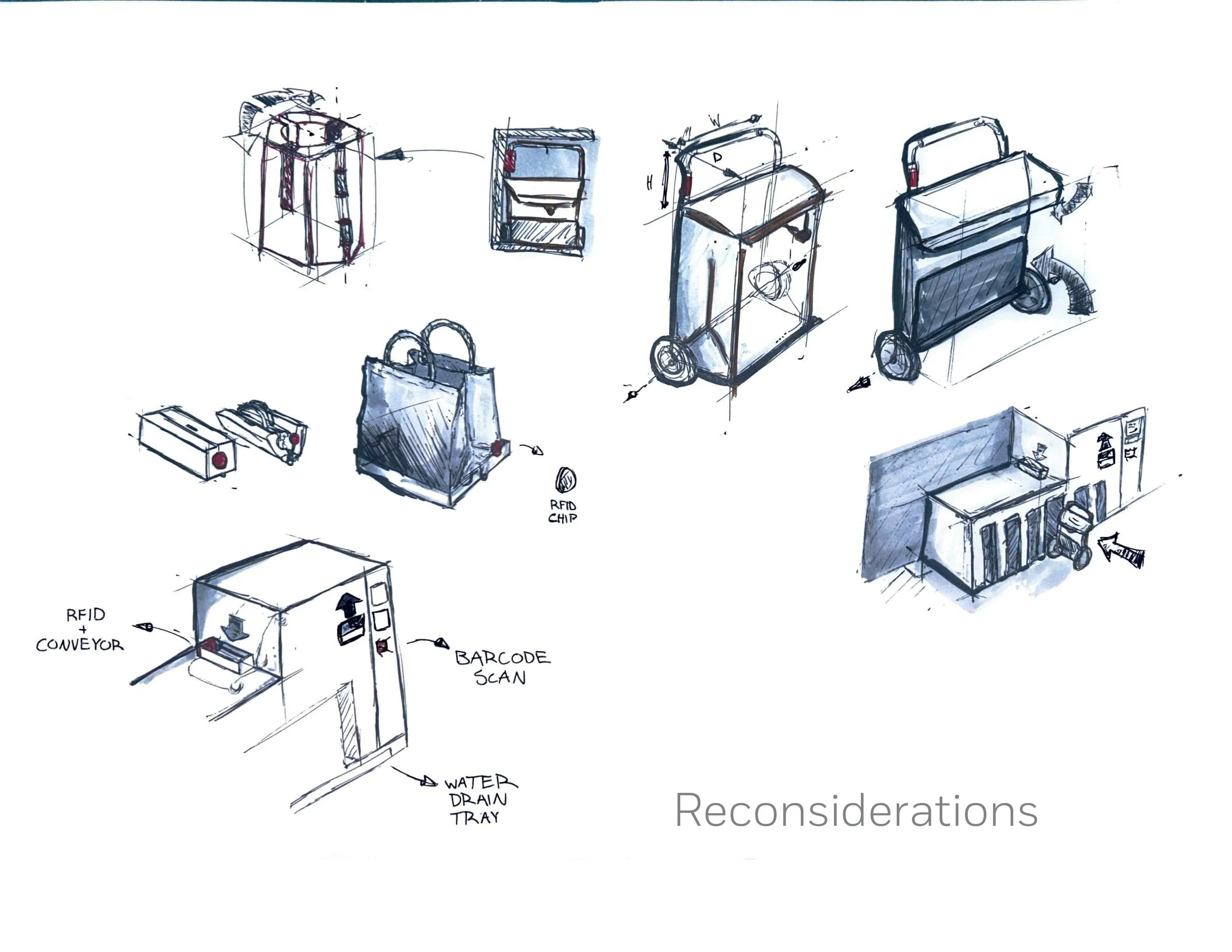
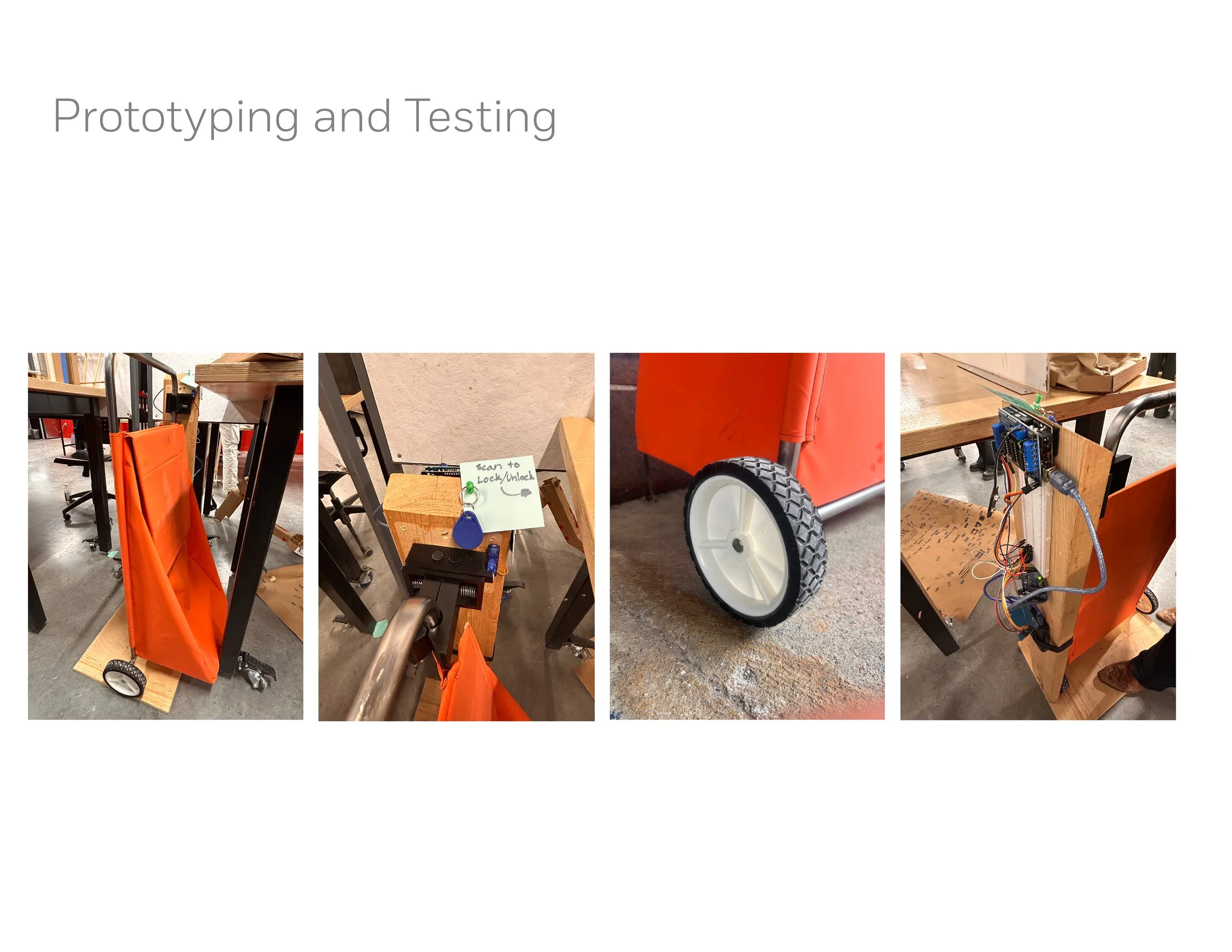
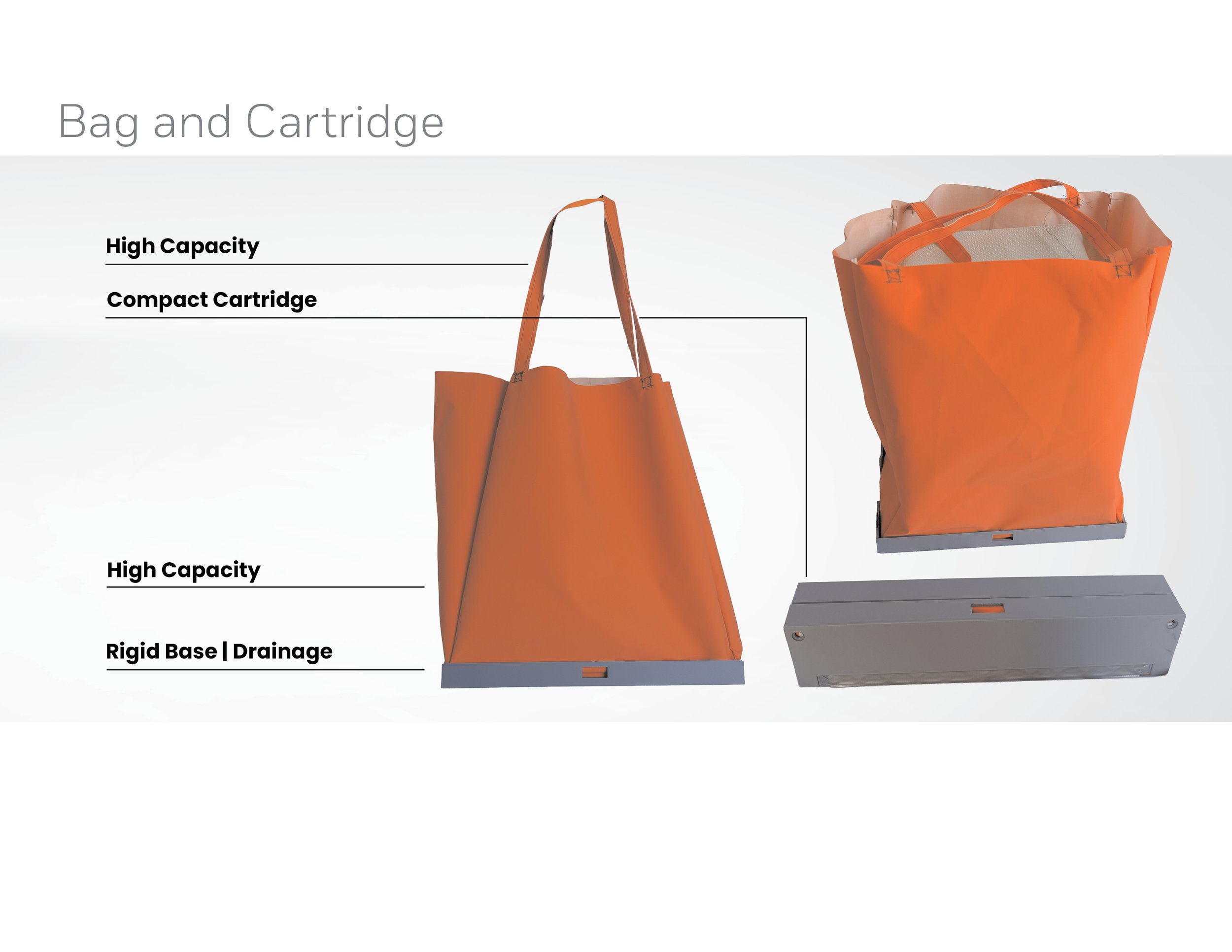
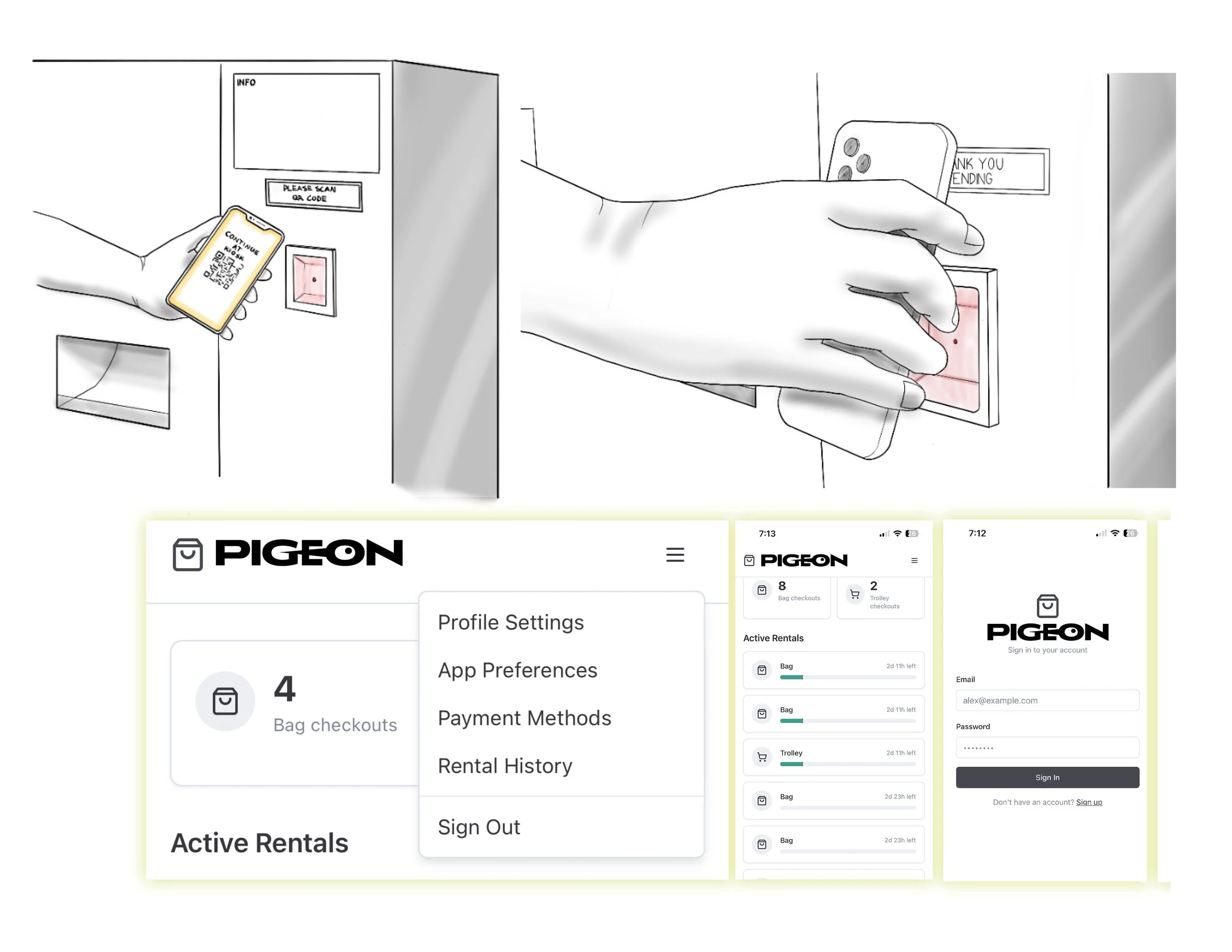
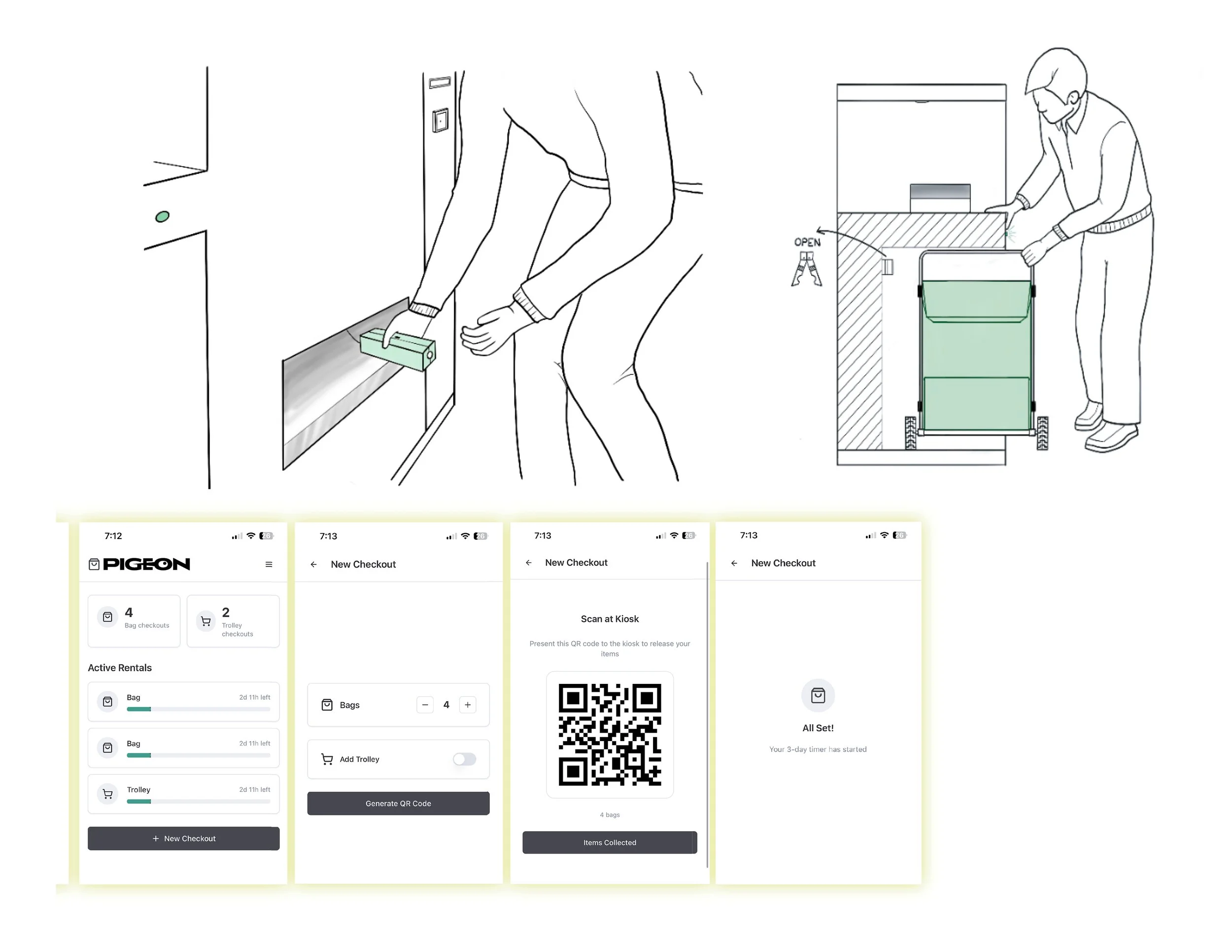
Project Origin
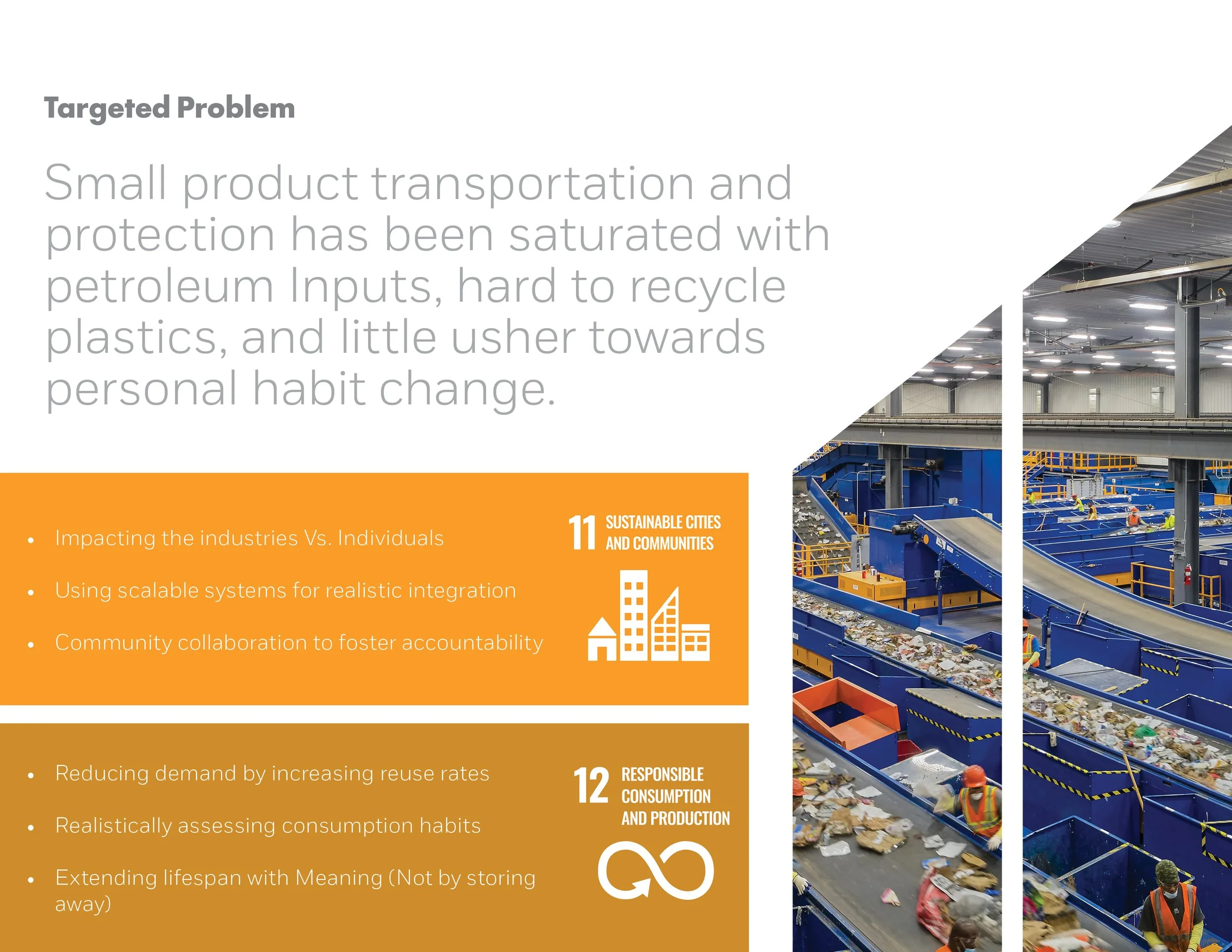
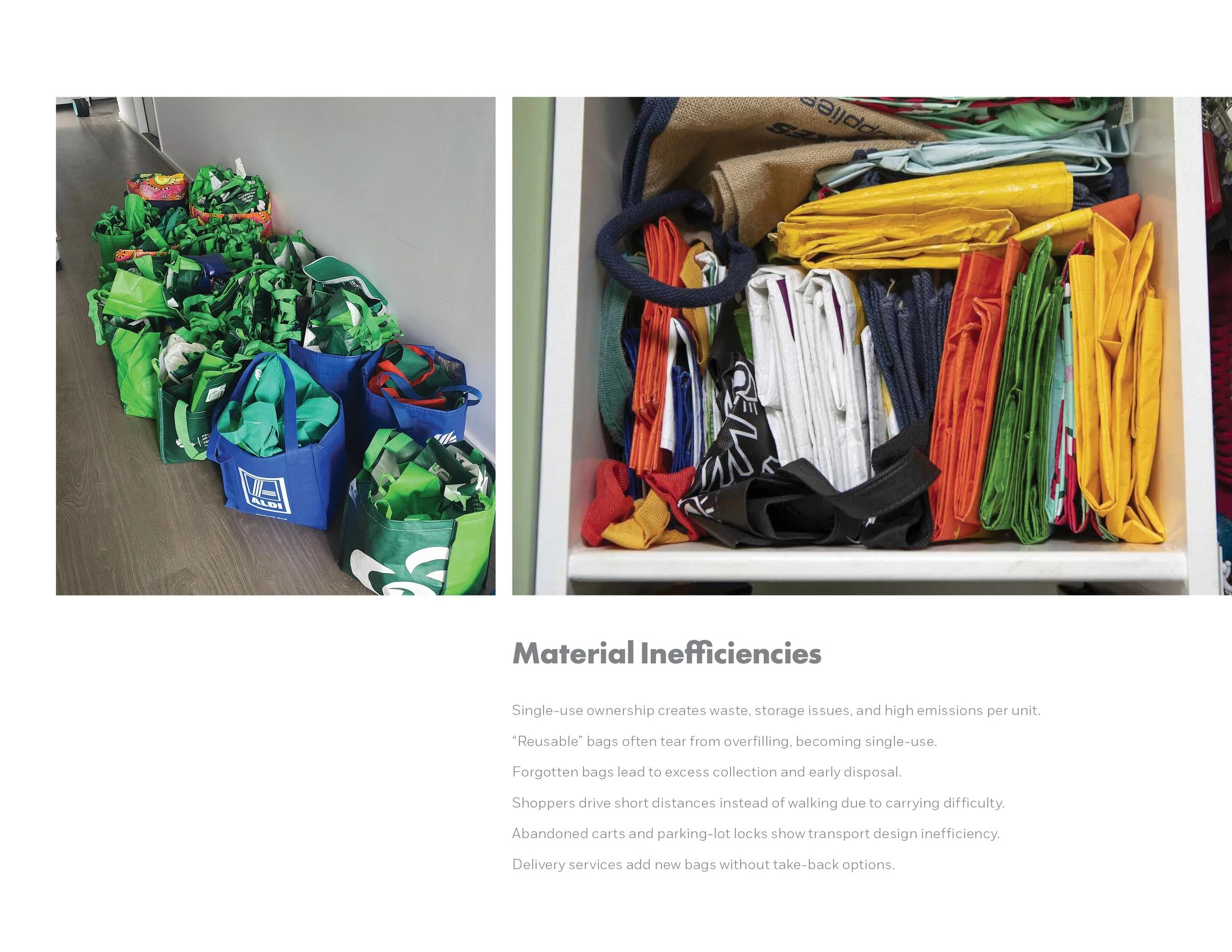
Being part of the sustainability group during my capstone year, there were infinite problems to approach. After initial discussion with the others within my group, I felt it was important to try my hand at improving the behaviour and routine of tasks everyone has to do, as opposed to doing strictly material or technology research. After lots of brainstorming, I realized I was overthinking how to discover and analyse typically unwatched and overlooked unsustainable practices. Within my own home, I found myself, my roommates, and my family constantly guilty of over-collecting waste and choosing high-emission options when running errands.
Digging Deeper
Step 1: Talking to Peers
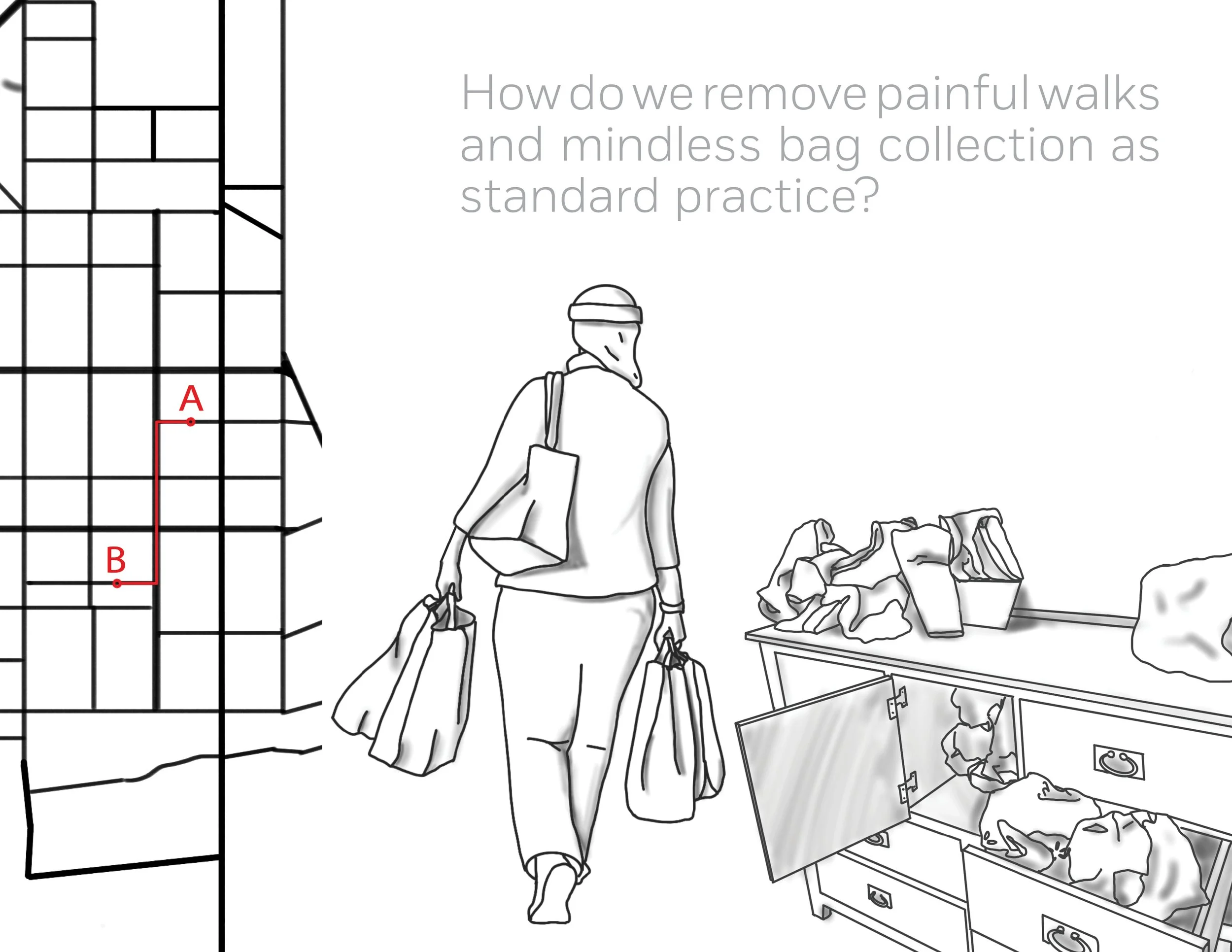
This first problem I wanted to address was the unintentional hoarding of bags that people had in their closet. I first talked to my roommates and about the overflowing entryway dresser we had, the drawers and cabinets, usually designed for shoes and apparel, had been completely taken over by supermarket bags. These are all labelled as reusable, but only got used one or twice before getting shoved into the pile with the rest. Then, going up a level, I began asking my classmates and friends how many they would guess had been collected in their own homes. Most ended up guessing between 50 and 100, all with a location in the home where they accumulated. Front closets, milk crates, dressers, bottoms of pantries, all packed to the brim with shopping bags, unused until families give in and throw out the bulk of them.
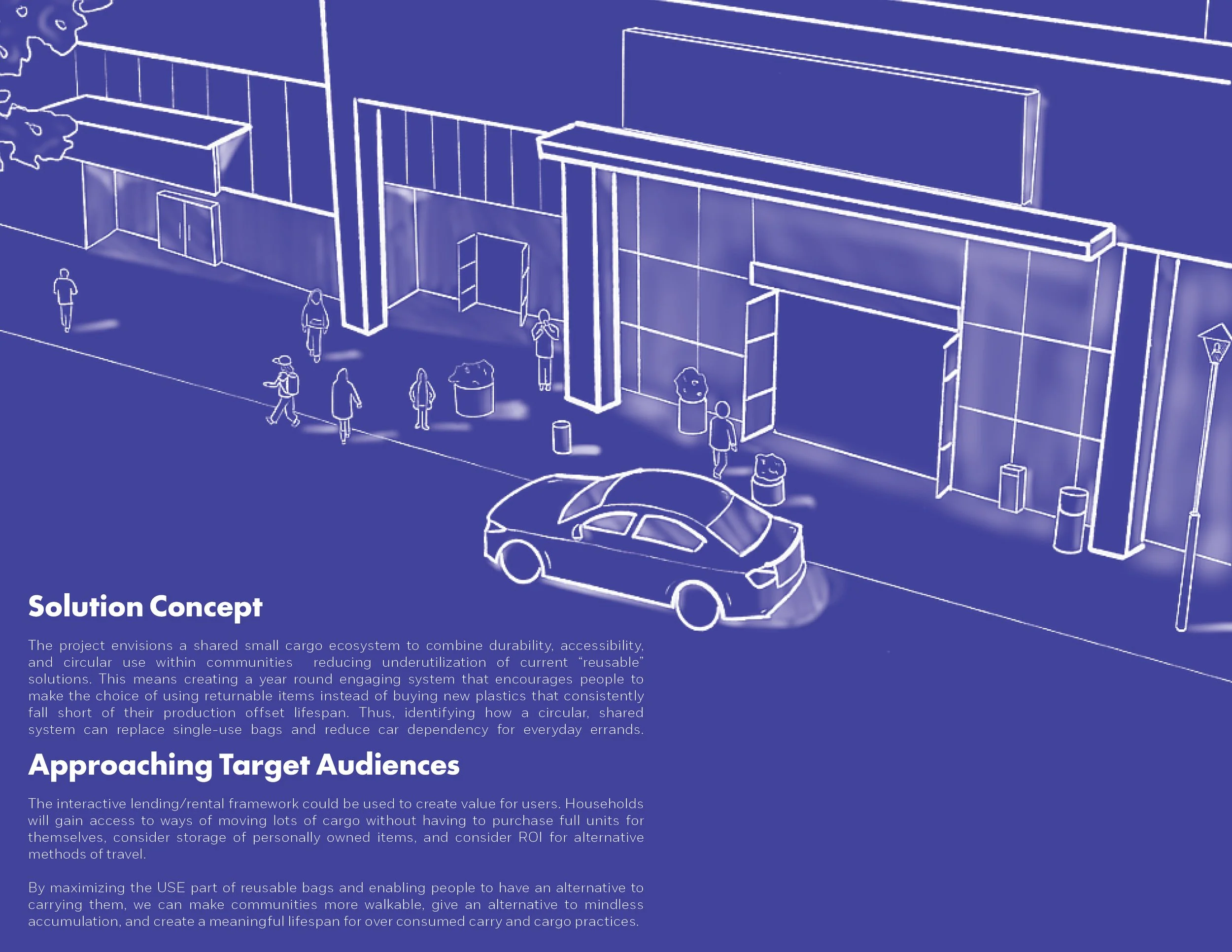
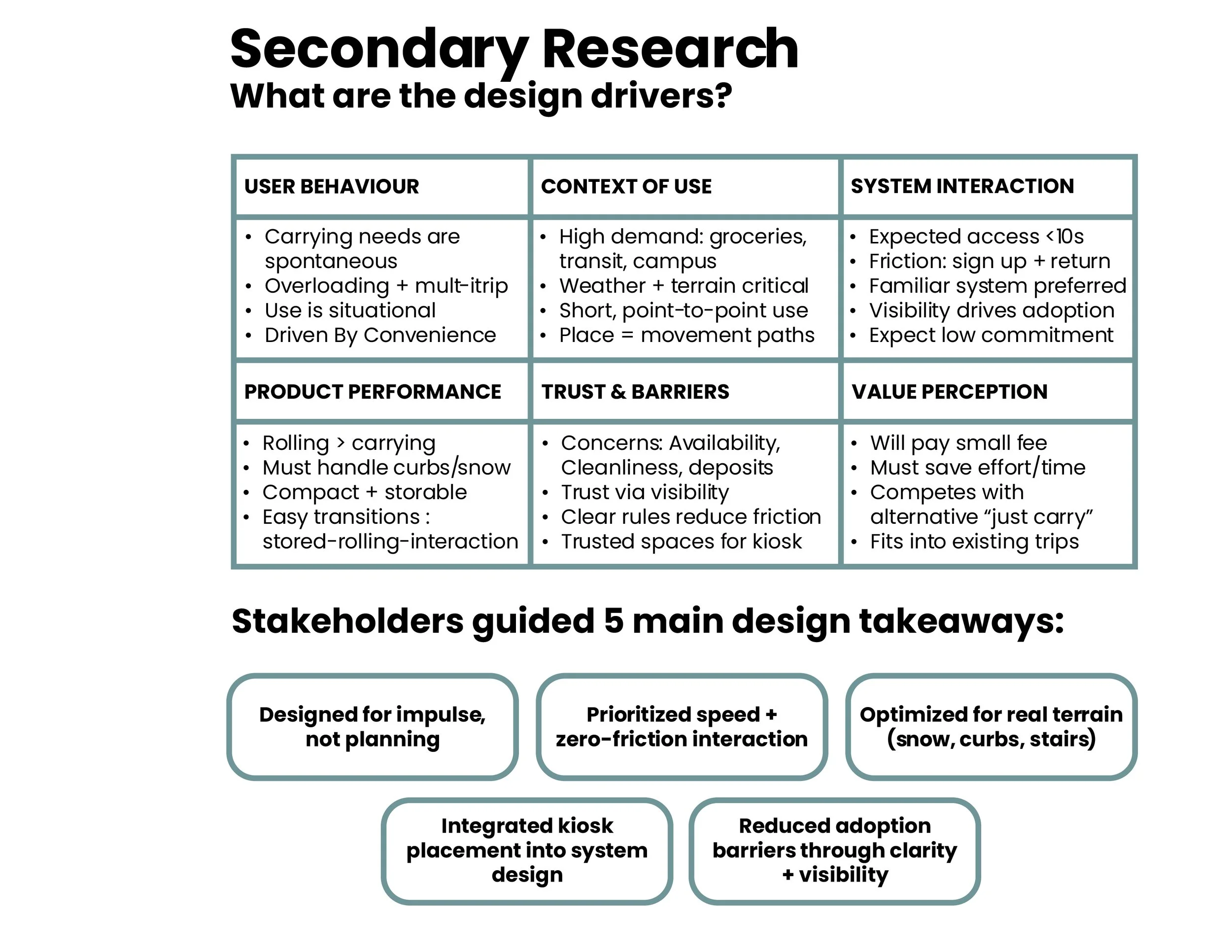
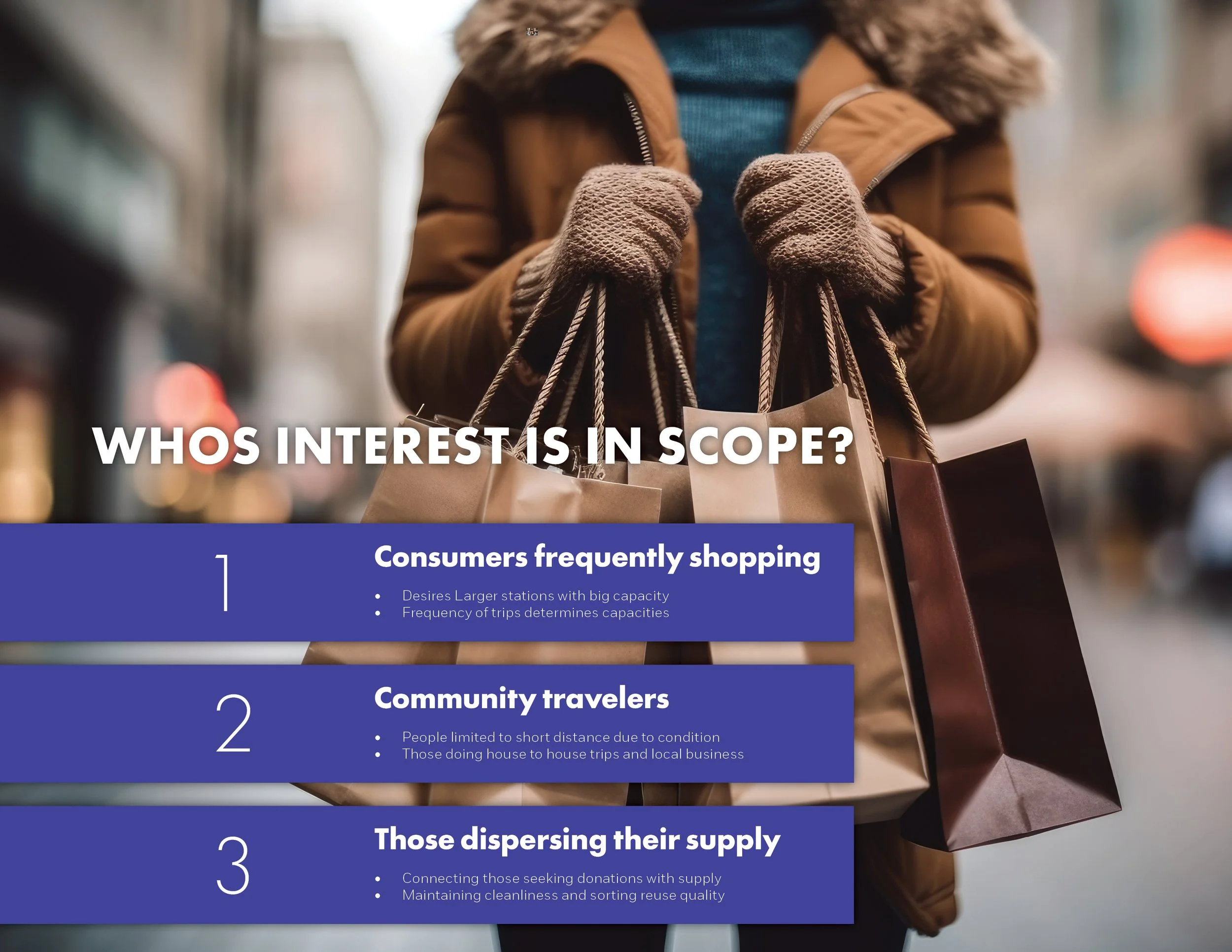
Next was the hassle of going shopping for essentials for anyone travelling solely on foot or with the addition of transit. Around 14 percent of Canadians commute by transit or walking, reaching nearly 30 percent in metropolitan areas. Yet, the ability to transport small cargo such as groceries, clothing, materials, and tools remains difficult and painful. Through a survey, results showed that people were unsatisfied with the limit on the amount of groceries and goods they could take around the city and home, either due to the maximum number of bags they could carry or the pain of carrying items exceeding safe weights. Alternatively, people were reporting frequently driving short distances or ordering groceries to their door, contributing to the first problem of bag accumulation with no good end-of-life options.
Step 2: Previous attempted solutions
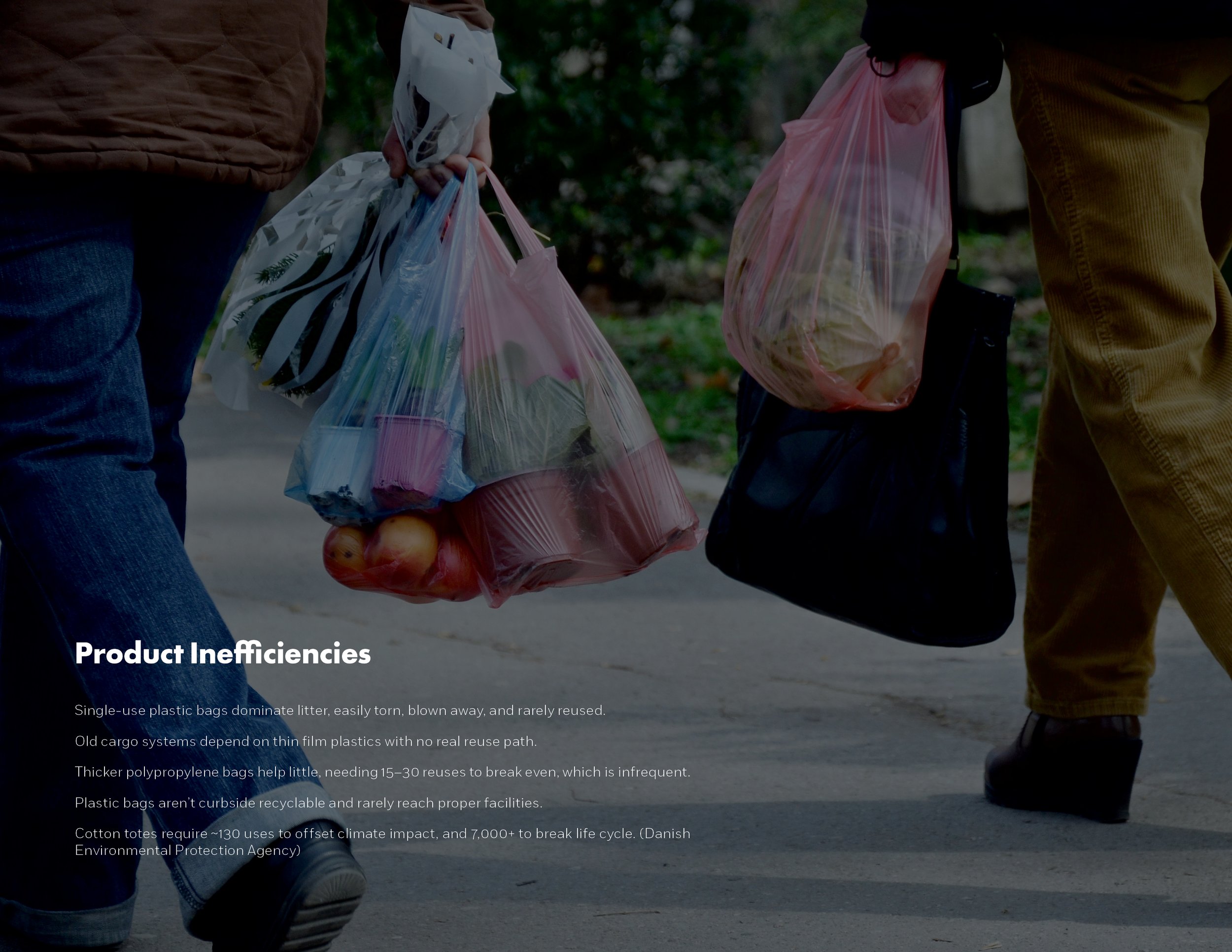
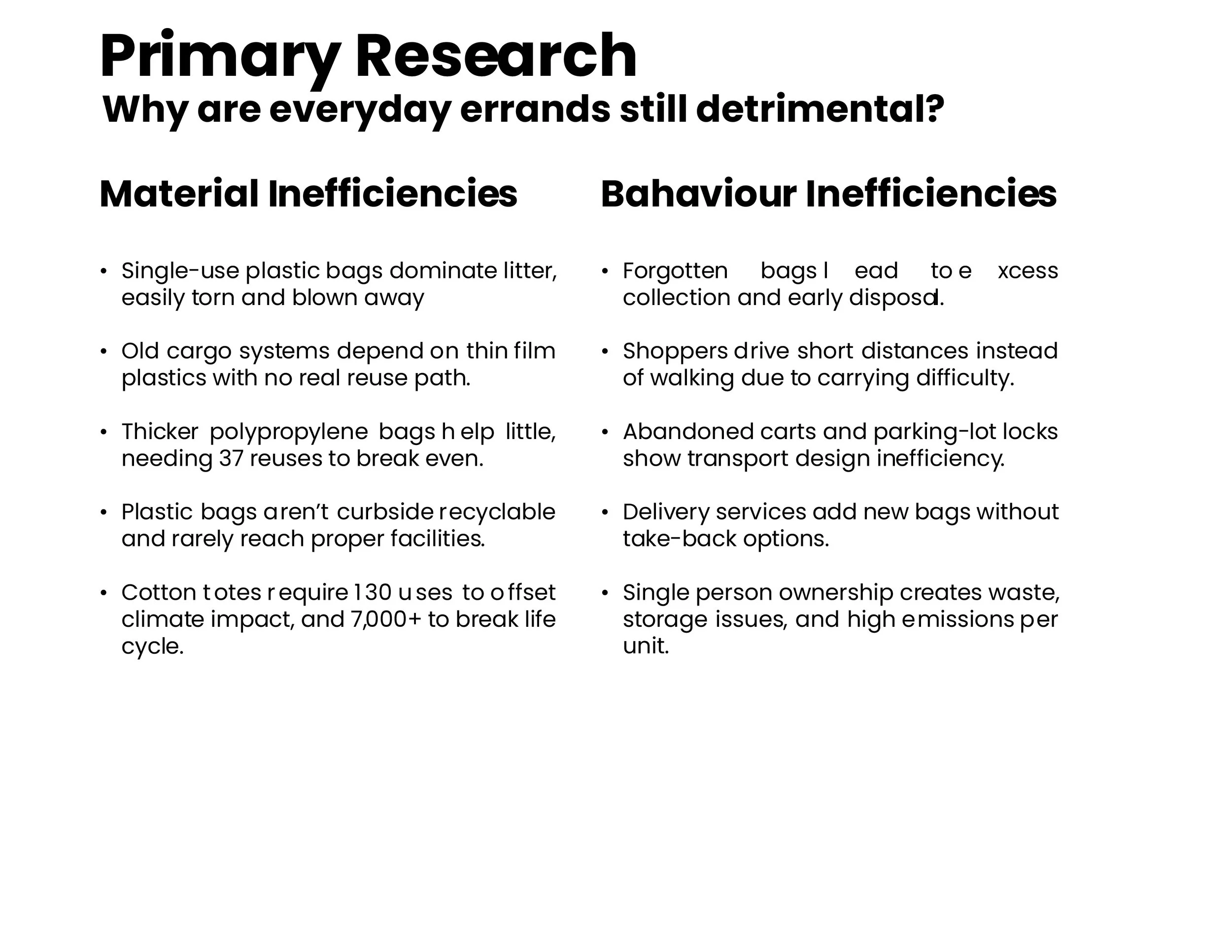
It’s hard to believe that the attempted solutions to waste in shopping have been so accepted despite resulting in larger issues for households and cities. For the bags, we started with single-use plastic bags, which only offset their production if used three times, but usually only last one use before ripping or getting thrown away out of habit. Then we transitioned to the supposedly reusable “fabric” bags, made of woven polypropylene, which take 15+ uses to offset production, but, as mentioned, created the problem of mindless collection. The only other option is tote bags, which take over 150 uses to offset production, and common grocers don’t find them profitable or marketable enough to make. These numbers don’t even include the energy and environmental impact of when each unit is disposed of in a landfill.
Step 1:
Step 1:
What We Offer
Basic Service

The Atlas Project →
IncludedInitial Consultation
Brainstorming Session
Collaborative Planning
Customized Deliverables
Multiple Feedback Rounds
Actionable Recommendations
Post-Project Support
Intermediate Service

The Echo Project →
IncludedInitial Consultation
Brainstorming Session
Collaborative Planning
Customized Deliverables
Multiple Feedback Rounds
Actionable Recommendations
Post-Project Support
Advanced Service

The Brightline Project →
IncludedInitial Consultation
Brainstorming Session
Collaborative Planning
Customized Deliverables
Multiple Feedback Rounds
Actionable Recommendations
Post-Project Support
Recommended“Their attention to detail and commitment to quality truly stood out. We’ve already recommended them to others.”
– Former Customer
Get In Touch
If you're interested in working with us, complete the form with a few details about your project. We'll review your message and get back to you within 48 hours.